
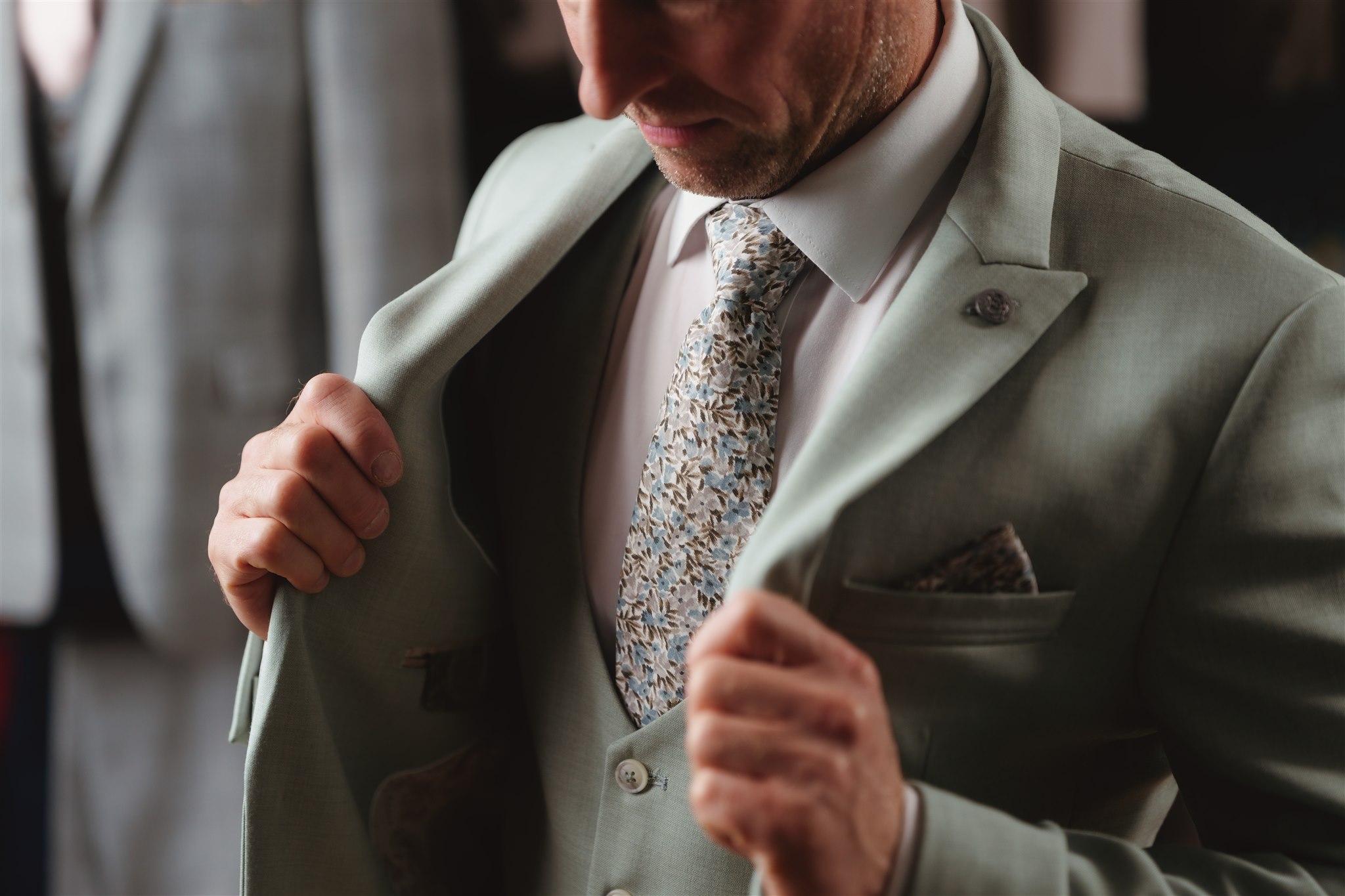
Your Suit is an Investment
Whether you spent £150 or £1,500, your suit deserves care. Proper maintenance keeps it looking sharp and lasting longer.
For purchased suits, start with the care label and supplier's advice. Hired garments are different: don't clean, repair or alter them yourself. Contact the showroom about any concerns.
After Each Wear
Hang it properly: Use a shaped wooden hanger that supports the shoulders. Wire hangers distort the shape.
Empty the pockets: Wallets, phones, keys stretch and distort the fabric.
Let it breathe: Don't shove it straight into a crowded wardrobe. Let it air for a few hours.
Brush it down: A quick brush with a clothes brush removes dust and surface dirt.
Marks and stains: Follow the care label and ask a specialist before treating purchased garments. Don't attempt to clean hired suits yourself.
The Dry Cleaning Myth
Don't dry clean too often. I know it sounds counterintuitive, but hear me out.
Cleaning methods need to suit the fabric and construction. A professional can advise on stains and how often cleaning is needed.
When to ask a cleaner, following the care label:
• Visible stains that won't spot clean
• After significant wear (wedding day, for instance)
• When the garment's care instructions and condition call for it
• If it genuinely smells (not just "could be fresher")
When not to dry clean:
• After every wear
• "Just to freshen it up"
• Because it's been in the wardrobe a while
Airing may help between wears, but steaming isn't suitable for every garment and doesn't replace cleaning when needed. Follow the label.
Storage
Day-to-day: On a proper hanger, in a wardrobe with space around it.
Long-term storage: Breathable garment bag, not plastic. Plastic traps moisture which causes mildew.
Mothballs vs cedar: Cedar blocks or lavender sachets deter moths without the chemical smell. Check your suits seasonally for any damage.
Folding for travel: Fold inside-out to protect the exterior. Use the hotel's hangers immediately on arrival.
Pressing and Steaming
Steamer: Check the care label and supplier's advice first. Steam can affect some fabrics and construction; ask a professional if unsure.
Iron: Follow the garment's care label for temperature and whether ironing is suitable. If unsure, ask a professional; don't iron hired garments yourself.
Professional pressing: For serious wrinkles or before major events, take it to a professional. Most dry cleaners offer pressing-only service.
Rotation
If you wear suits regularly, rotate them.
Why: Wool needs time to recover between wears. The fibres relax, creases hang out, and the suit lasts longer.
If practical: Give purchased suits time to air between wears. There's no need to buy more suits simply to meet a fixed rotation rule.
This is why many people with regular suit needs buy multiple suits. It's not extravagance; it's practical.
Quick Repairs
Loose button: With a purchased suit, ask a repair specialist if you're unsure how to secure it. Don't repair hired garments yourself.
Fallen hem: Have a purchased suit assessed for repair. For a hired garment, contact the showroom rather than stitching or taping it.
Small tear: Have a specialist assess a purchased suit. A repair may be possible, but it may still be visible.
Shiny patches: Ask a specialist before trying a treatment; not all fabric damage can be reversed.