
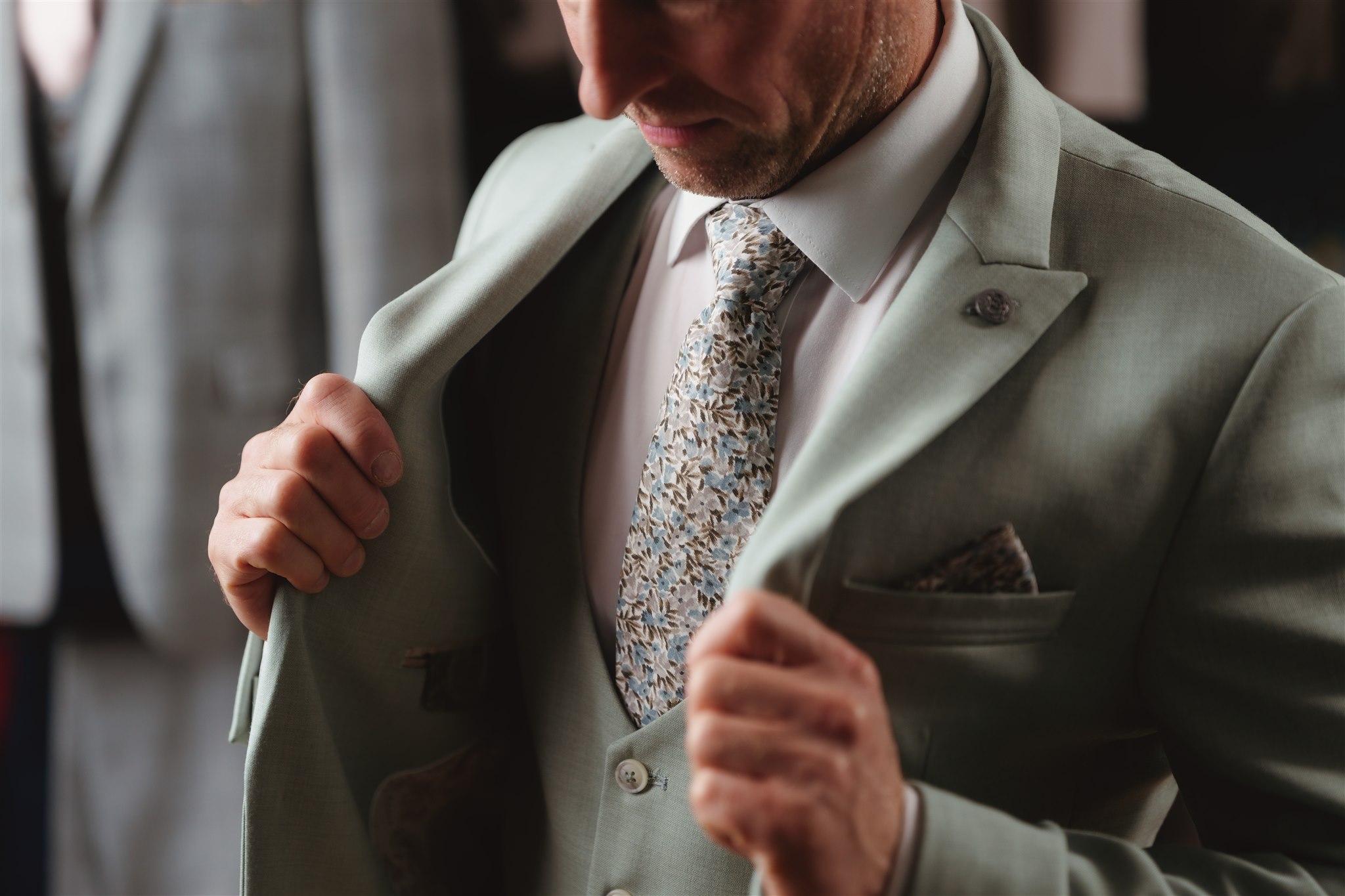
Walk into two different suit shops and you could find two very similar-looking navy suits, one priced at £99 and another at £800 or more.
So what’s actually different? And perhaps more importantly, will anyone notice?
The answer isn’t always obvious. Suit prices are influenced by several factors, including fabric, construction, manufacturing methods, brand, fit and the level of personalisation involved.
But a higher price doesn’t automatically mean a suit is better for you.
1. Does the fabric make a difference?
Yes, and it can be one of the biggest contributors to the price.
Suits can be made from wool, polyester, linen, cotton and various blends, all with different characteristics.
Wool is often associated with more expensive tailoring because of its versatility, drape and the range of qualities available. However, not all wool is the same, and the composition alone won’t tell you everything about a suit’s quality.
Polyester and blended fabrics can offer affordability and practical benefits, particularly for occasional wear or when shopping to a particular budget.
Linen is popular for its relaxed appearance and suitability for warmer weather, although its tendency to crease is something to consider.
Rather than assuming one fabric is automatically superior, ask what the suit is made from and whether it’s suitable for how and where you’ll be wearing it.
2. What’s different about the way expensive suits are made?
Two suits can look very similar on a hanger but have quite different construction underneath.
The internal structure of a jacket helps determine how it holds its shape and sits against your body.
Broadly speaking, you may come across three types of construction:
Fused construction: Uses an adhesive-backed interlining to help give the jacket structure. It’s generally less labour-intensive to manufacture and is common in more affordable tailoring.
Half-canvas construction: Uses canvas through part of the jacket’s front, generally around the chest and lapels, with other areas fused.
Full-canvas construction: Uses a canvas structure extending further through the front of the jacket. This is typically more labour-intensive and often found in higher-priced tailoring.
Don’t worry if these terms are unfamiliar. You’re certainly not expected to understand jacket construction before walking into a suit shop!
There are good and less-good examples within each category. A suit shouldn’t be judged on construction alone, and there’s little point paying for features you don’t personally value.
3. Am I paying extra for the brand?
Sometimes, yes.
A designer label can influence the price through its positioning, marketing, distribution and reputation.
That doesn’t mean a branded suit is poor value. You may genuinely prefer its styling, fabric choices or overall finish.
Equally, a lesser-known brand or independent retailer may offer something you’re just as happy with for considerably less.
If you’re comparing two suits, try to look beyond the label and consider the actual garment.
4. Does spending more mean a better fit?
Not necessarily, and this is one of the most important things to understand.
An £800 suit that doesn’t sit correctly across your shoulders or feels uncomfortable through the chest isn’t automatically going to look better than a £199 suit that fits you well.
Fit should be one of your priorities, whatever your budget.
It’s also worth allowing for the possibility of alterations when buying Ready-to-Wear. A relatively modest adjustment can sometimes make a noticeable difference to the finished look, although not every fit problem can be corrected.
Remember to include any alterations in your overall budget rather than treating them as an afterthought.
For practical fit checks, see I know nothing about suits. Where do I start?.
5. What am I paying for with a personalised suit?
When you move from Ready-to-Wear into more personalised tailoring, part of the additional cost reflects the service and choices involved.
Rather than simply selecting an existing garment, you may be able to choose elements such as fabric, lining, buttons, lapels and other details.
There are different approaches to personalised tailoring, and terms such as Made-to-Order, Made-to-Measure and Bespoke are not necessarily interchangeable. Ask the retailer exactly how their service works and what can or cannot be changed.
For example, Pure Suits offers Made-to-Order from £649, with a typical spend of £749–£989.
Our process begins with choosing your design details, followed by trying on an existing master suit to establish your individual fit before your order is manufactured.
It’s a more personalised experience than choosing an existing Ready-to-Wear suit, but it isn’t traditional bespoke tailoring involving a completely new pattern created from scratch.
6. Will an expensive suit last longer?
Possibly, but price alone is no guarantee.
How often you wear it, the fabric and construction, how you care for it and whether your size or preferences change can all influence how useful a suit remains over time.
If you’re buying something for regular use, it may be worth investing more in a garment that meets those requirements.
If you’re buying for a single occasion, spending significantly more in the hope that it lasts for years might not be the best use of your budget.
A suit only represents good value if it works for you.
7. Is it worth paying £800 or more for a suit?
It certainly can be, but I’d ask yourself a few questions before deciding.
Are you paying more for a fabric or finish you genuinely prefer? Is personalisation important to you? Will you wear it regularly? Does the more expensive option fit and feel noticeably better?
If the answer is yes, the additional spend may be entirely worthwhile.
But if you try on a £199 suit, love how it looks, feel comfortable wearing it and it meets everything you need, there’s no reason to spend another £601 simply because a more expensive alternative exists.
Equally, if you’re buying something very distinctive for a one-off occasion, hiring might be worth considering rather than committing to a purchase you’ll rarely wear again.
What should I ask before buying any suit?
Regardless of whether you’re spending £99 or £1,000, it’s worth asking:
What fabric is the suit made from?
What’s included in the advertised price?
Can I try it on and compare different fits?
Are alterations available, and are they included or charged separately?
How should the suit be cared for?
If it’s being made for me, what can I personalise and how does the fitting process work?
What are the payment and cancellation terms?
A good retailer should be comfortable answering these questions without making you feel that you need to spend more than you intended.
The best suit isn’t necessarily the most expensive one. It’s the one that fits you, suits your needs and feels worth what you’ve paid for it.
Planning a wedding outfit? Read How much does a complete wedding suit actually cost?.